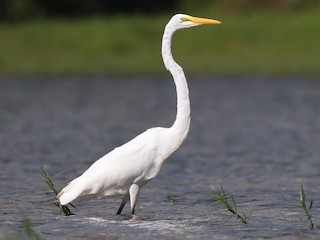
The largest entirely white heron in Iberá and one of the most abundant. A long, sinuous neck, a long, sharp yellow bill, black legs and toes. In the breeding season it develops long filamentous ornamental plumes (aigrettes) on the back that extend beyond the tail; these plumes nearly drove the species to extinction in the 19th century due to the European fashion of using them on hats. The bare facial skin turns intense green during courtship. It measures 85 to 100 cm.
Behaviour
A solitary, territorial hunter at its fishing spots. It fishes by wading slowly through shallow water or from a bank, waiting patiently to strike with its bill. Very versatile in its diet: fish, frogs, water snakes, large insects and even field mice in damp grasslands.
How and when to see it
Year round. One of the most frequent birds at any body of water in the Iberá. Unmistakable for its size and entirely white plumage.
Where to see it in the Iberá
The gateways of the Great Iberá Park where great egret has confirmed presence:
Tours to see it
Verified providers operating at the gateways where great egret lives. You contact them directly on WhatsApp from the app.
- Esteros Ñe’é
Experiences with local storytelling and a cultural take on the marshes.★ 5.0 - Gaucho Argentino
Horseback journeys across a network of refuges in Iberá. Multi-day rides with overnight…★ 5.0 - Jurassic Plant - Night Tour
The only carnivorous-plant garden in Argentina and a pioneer in Latin America. A guided…★ 5.0 - Irupé Excursiones
Guided hiking. Guided visit to museums, historic sites, chapels and trails of the town…★ 5.0
Species profile
- Common nameGreat Egret
- Scientific nameArdea alba
- GroupBird
- StatusNative
Other species of the Iberá
Discover all the wildlife of the Iberá
More than 250 species with photos, profiles and the gateways where you can see them. Map, providers and trip planner. Free, no download needed.
Open Iberá Experience