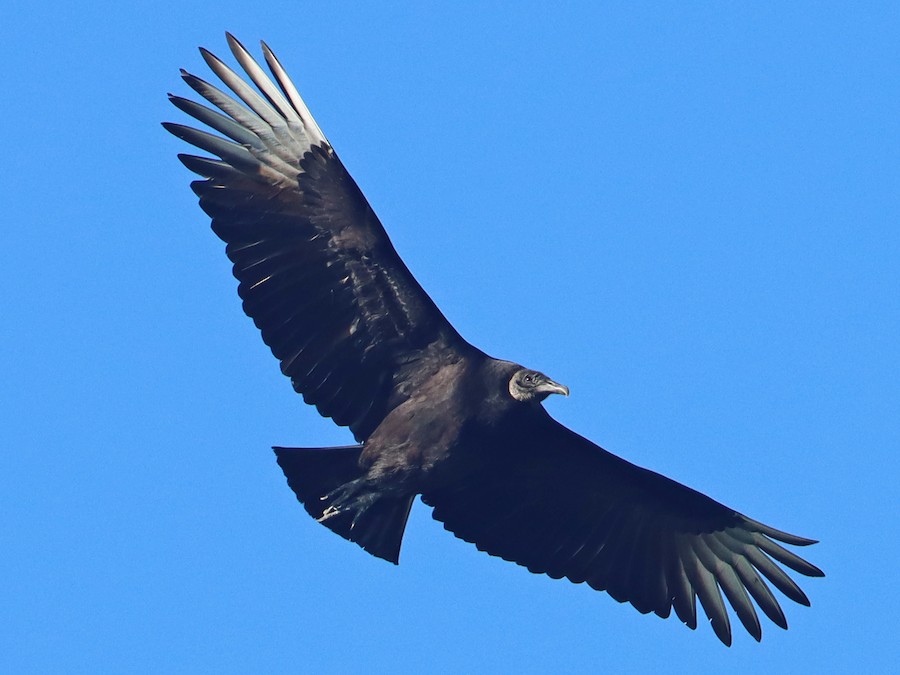
The most sociable and opportunistic vulture on the continent. It is distinguished from the Turkey Vulture by its dark gray or blackish bald head, its completely horizontal wings while soaring (without the Turkey Vulture's dihedral), and the white patches at the tips of the primary feathers very visible from below. A shorter, squarer tail. It measures 55 to 67 cm. Very gregarious: it forms groups of dozens of birds at roosts or around carrion.
Behaviour
A generalist scavenger that locates carrion mainly by sight, often following the turkey vultures that detect it by smell. An opportunistic omnivore that does not turn down refuse, fruit or even eggs. Its roosting colonies in large trees are very conspicuous.
How and when to see it
Year round. Unmistakable are the groups soaring in circles over any dead animal or prowling around the portal entrances.
Where to see it in the Iberá
The gateways of the Great Iberá Park where black vulture has confirmed presence:
Tours to see it
Verified providers operating at the gateways where black vulture lives. You contact them directly on WhatsApp from the app.
- Esteros Ñe’é
Experiences with local storytelling and a cultural take on the marshes.★ 5.0 - Gaucho Argentino
Horseback journeys across a network of refuges in Iberá. Multi-day rides with overnight…★ 5.0 - Jurassic Plant - Night Tour
The only carnivorous-plant garden in Argentina and a pioneer in Latin America. A guided…★ 5.0 - Irupé Excursiones
Guided hiking. Guided visit to museums, historic sites, chapels and trails of the town…★ 5.0
Species profile
- Common nameBlack Vulture
- Scientific nameCoragyps atratus
- GroupBird
- StatusNative
Other species of the Iberá
Discover all the wildlife of the Iberá
More than 250 species with photos, profiles and the gateways where you can see them. Map, providers and trip planner. Free, no download needed.
Open Iberá Experience