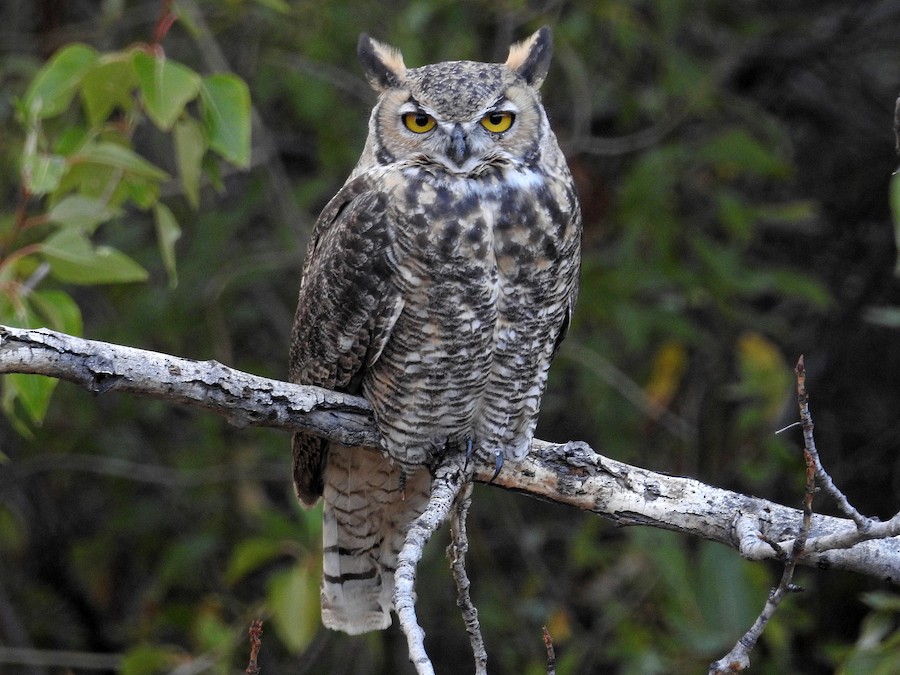
One of the largest and most powerful owls in the Americas and an imposing presence in the Iberá. The plumage is a complex cryptic pattern of browns, blacks, whites and ochers with bars and mottling. The "ears" are long, very visible facial feathers. The eyes are large and intense orange-yellow. The facial disk is reddish-brown with a black border. It measures 45 to 60 cm with a wingspan of up to 1.5 meters. The white throat becomes visible when it calls, inflating the gular sac with a deep, resonant "hoo-hoo hoo-hoo."
Behaviour
A nocturnal top predator of the food chain. It hunts mammals up to the size of armadillos, nocturnal birds, frogs and snakes. Once established in a territory, it tends to stay for years. Its feathers are part of the ceremonies of the indigenous peoples of the Gran Chaco.
How and when to see it
Nocturnal. Detected by its deep song at nightfall. Occasionally seen at dusk on high perches. Guided night walks at Portals Galarza and Laguna Iberá are the best option.
Where to see it in the Iberá
The gateways of the Great Iberá Park where great horned owl has confirmed presence:
Tours to see it
Verified providers operating at the gateways where great horned owl lives. You contact them directly on WhatsApp from the app.
- Esteros Ñe’é
Experiences with local storytelling and a cultural take on the marshes.★ 5.0 - Gaucho Argentino
Horseback journeys across a network of refuges in Iberá. Multi-day rides with overnight…★ 5.0 - Jurassic Plant - Night Tour
The only carnivorous-plant garden in Argentina and a pioneer in Latin America. A guided…★ 5.0 - Irupé Excursiones
Guided hiking. Guided visit to museums, historic sites, chapels and trails of the town…★ 5.0
Species profile
- Common nameGreat Horned Owl
- Scientific nameBubo virginianus
- GroupBird
- StatusNative
Other species of the Iberá
Discover all the wildlife of the Iberá
More than 250 species with photos, profiles and the gateways where you can see them. Map, providers and trip planner. Free, no download needed.
Open Iberá Experience